
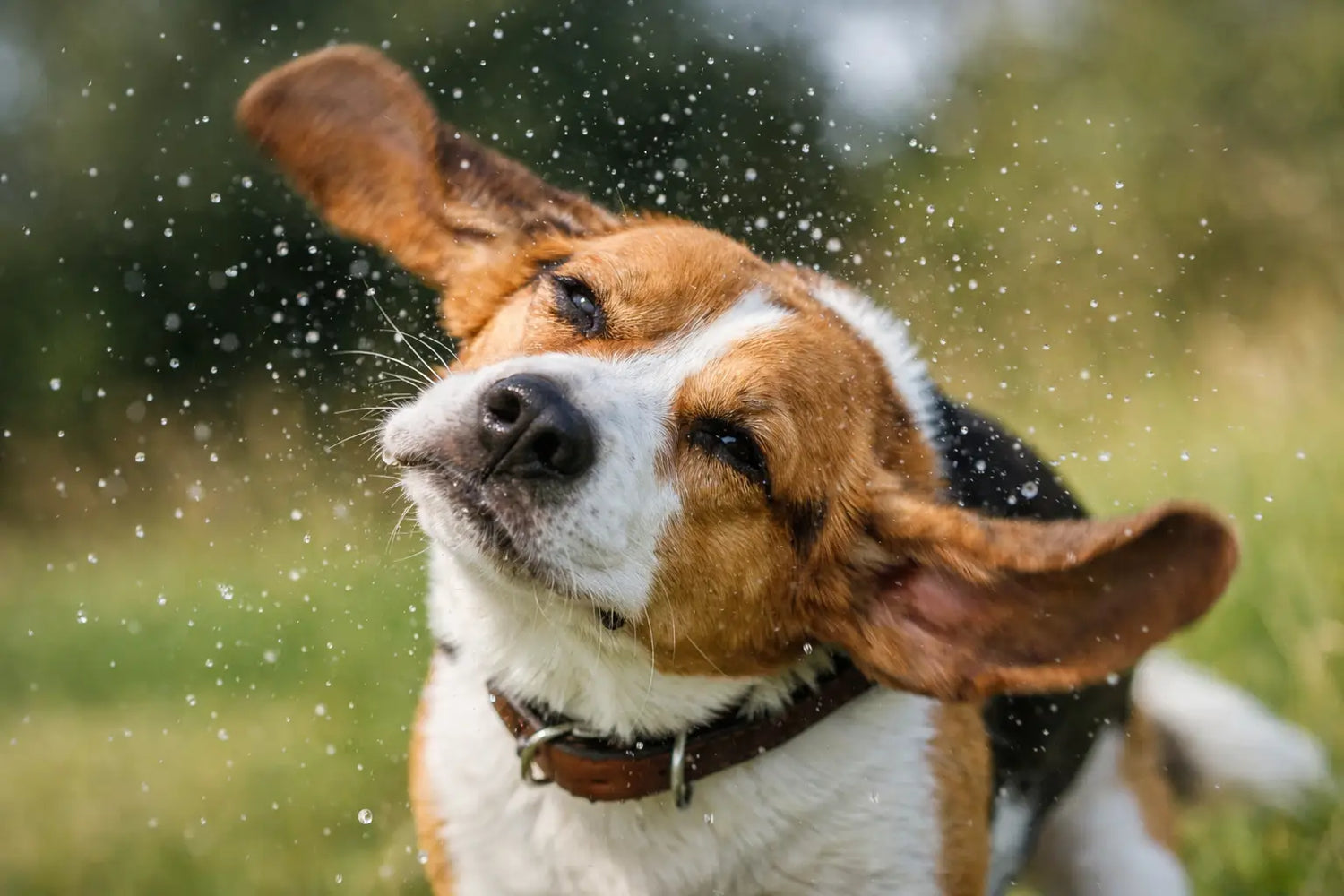
When a dog starts shaking its head several times a day, it is not doing it “out of habit.” In most cases, there is a real discomfort behind that gesture. Understanding why the dog shakes its head is the first step to intervene quickly, prevent the problem from worsening, and restore its well-being.
Why the dog shakes its head: the most common causes
The most frequent reason is ear irritation. A dog’s ears are delicate structures, poorly ventilated and easily prone to the buildup of earwax, moisture, and impurities. When this balance is disturbed, the dog seeks relief by shaking its head, scratching, or holding one ear lower than the other.
Among the most common causes are external otitis, excess earwax, redness of the ear flap, dirt residues after walks, moisture retained after bathing, and allergic reactions. In some cases, the problem can also be favored by a more closed ear conformation, as happens in many breeds with floppy ears.
There is also an aspect that many owners underestimate. A mild discomfort at first, if neglected, can intensify within a few days. The more the dog shakes its head, the more it risks further irritating the area, creating a vicious cycle of itching, inflammation, and discomfort.
Signs to watch for along with the head movement
If the dog shakes its head occasionally, perhaps after waking up or after a run, there is no need to worry necessarily. The situation changes when the gesture becomes repeated, persistent, or accompanied by other signs.
Pay attention if you notice a bad odor from the ears, presence of discharge, dark or abundant earwax, redness, sensitivity to touch, frequent scratching, or whining when you touch its head. Even the simple fact that the dog is more nervous than usual or tries to rub its ear on carpets and sofas deserves attention.
In these cases, it’s not just about “cleaning better.” It’s necessary to understand what kind of imbalance is occurring and act with specific, gentle but effective products that respect the ear’s physiology.
When the problem is the ear and not the head
Many owners look for the cause in the neck, teeth, or strange behavior. In reality, when wondering why the dog shakes its head, very often the answer lies inside the ear canal. An inflamed ear causes an intense sensation of itching or burning, and the dog reacts instinctively.
Otitis can have different origins. Sometimes there is excess moisture, other times a microbial overgrowth favored by altered skin. In other cases, allergies, skin sensitivity, or uncontrolled earwax production come into play. For this reason, there is no single answer valid for all dogs. However, there is a useful rule: the sooner the ear’s balance is restored, the easier it is to prevent symptom worsening.
Ear cleaning: helpful, but only if done properly
Proper ear cleaning helps remove dirt, excess earwax, and residues that can feed the discomfort. But be careful: cleaning too often, using harsh products, or acting improvisedly can worsen the situation.
A dog’s ear should not be treated with generic detergents or irritating substances. It needs specially formulated solutions with functional ingredients that soothe, rebalance, and sanitize. This is where choosing a quality dermofunctional support really makes a difference.
For owners seeking a natural but serious approach, plant-based actives can offer concrete support. When properly selected and processed, they help cleanse without aggression and calm stressed skin.
The value of natural ingredients in ear irritations
In a dog’s ear well-being, naturalness must not be a vague promise. It must translate into functional ingredients, dosed with care and included in formulations developed for a precise goal.
Aloe Arborescens is particularly appreciated for its soothing, moisturizing, and rebalancing action on the skin. In the presence of redness, itching, or sensitivity, it helps support local comfort and reduce that irritating sensation that makes the dog shake its head continuously. Carrot, thanks to its profile rich in substances useful for skin nourishment, contributes to maintaining more protected and resilient skin.
When these actives are preserved with careful processing methods, such as the HDR cold process, the result is a support more faithful to the original properties of the raw materials. This aspect matters especially when seeking a gentle but effective aid for a sensitive area like the ear.
When a targeted product is needed and not an improvised remedy
If the dog continues shaking its head for several days, DIY has very limited margins. It’s not enough to just mask the symptom. Proper ear hygiene must be promoted and the skin helped to regain balance.
A well-formulated ear product should cleanse, help limit impurity buildup, and offer a local soothing effect. In predisposed subjects, this type of support is useful not only when discomfort is already present but also as a regular preventive measure.
This is where a specialized solution like those developed by Aloeplus Cani e Gatti finds its practical usefulness. The combination of selected natural actives, veterinary approach, and dermofunctional formulation allows addressing the problem consistently with the dog’s real needs, without treating the ear as just any other area.
When to consult the veterinarian
There are situations where home observation is not enough. If the dog shakes its head violently, tilts its head, loses balance, shows obvious pain, or has abundant discharge, it is right to contact the veterinarian. The same applies if the problem recurs often or does not improve despite proper hygiene.
This does not contradict the importance of natural remedies. On the contrary, it reinforces it. An effective natural approach works better when included in a conscious management of the problem, with professional support when needed in more delicate cases.
Prevention is easier than chasing the problem
Many ear disorders start silently. A bit of moisture retained after bathing, earwax buildup, slight skin sensitivity. At first, the dog shakes its head only occasionally. Then the discomfort increases, along with the risk of inflammation.
For this reason, prevention has concrete value. Regularly checking the ears, drying them well after water exposure, cleaning them gently, and using specific products in dogs more prone to issues helps reduce the risk of recurring irritations. It’s a small routine that can prevent a lot of discomfort.
Diet, skin condition, and individual allergy tendencies can also play a role. In some dogs, the problem will be occasional; in others, it will require more consistency. There is no one-size-fits-all formula, but there is a simple principle: listen to the dog’s signals before they become a bigger problem.
What to do if your dog often shakes its head
The first thing is to observe without waiting too long. See if the ear looks dirty, red, or smelly. Avoid cotton swabs, non-specific detergents, and home remedies. If the discomfort is mild, ear cleansing with a targeted and gentle product can be a sensible first step.
If instead you notice pain, discharge, or rapid worsening, a veterinary evaluation is needed. Meanwhile, choosing an ear support with functional natural ingredients can help care for the ear respectfully, effectively, and oriented toward restoring well-being.
When the dog shakes its head, it is telling you something very clear: there is discomfort that deserves attention. Intervening well, with skill and gentleness, means truly protecting it in its daily life.