
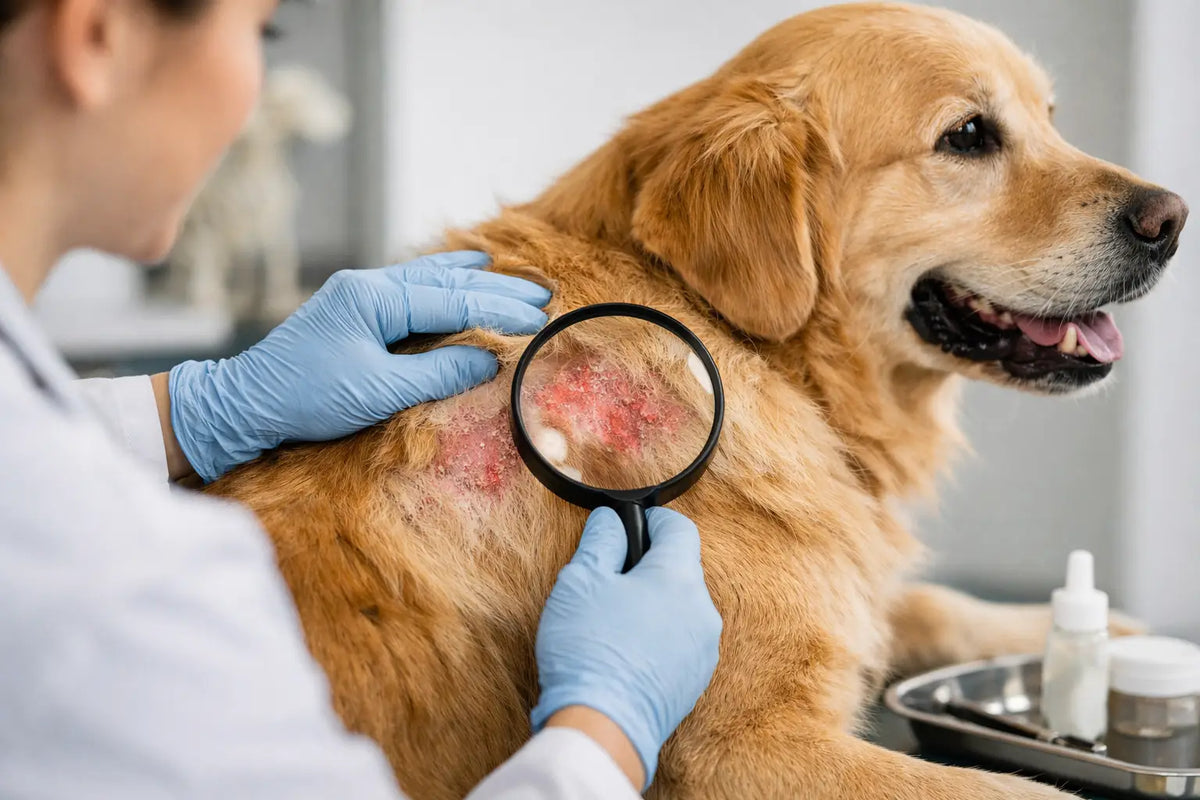
A dog that scratches itself until it disrupts sleep, constantly licks a paw, or emits an unusual odor is not simply experiencing a passing annoyance. In veterinary clinical cases of canine dermatitis, these signs are often the starting point for identifying a disruption of the skin barrier, an allergy, parasites, or a secondary infection. Acting early means reducing the dog's discomfort and preventing localized redness from becoming a more difficult lesion to manage.
Dermatitis is not a single diagnosis: it is the skin's response to various, sometimes overlapping causes. For this reason, the effective solution is not to cover up the itch but to observe the overall picture, involve the veterinarian, and choose a local treatment consistent with the skin’s condition.
Veterinary clinical cases of canine dermatitis: what they teach us
Clinical cases help understand a fundamental rule: two dogs with red skin can have very different needs. Age, breed, season, diet, lifestyle, parasite prevention, and affected areas guide the diagnostic process. The veterinarian may use a dermatological exam, cytology, skin scraping, ectoparasite search, cultures, or targeted dietary assessments.
Case 1: red paws and continuous licking
An adult dog that licks the spaces between its toes, especially after walks or during certain times of the year, may have podal dermatitis. Grass, pollen, humidity, irritating residues on the ground, and environmental allergens can worsen already sensitive skin. However, licking feeds the problem: moisture stagnates, the skin barrier weakens, and the risk of secondary microbial overgrowth increases.
The first step is always to carefully dry the paws and check for foreign bodies, cuts, or nodules. If the redness persists, the veterinarian determines whether it is necessary to treat an allergy, infection, or another cause. In daily routine, a specific cream like Zampet provides dermofunctional support to dry and stressed areas: aloe and carrot are combined with urea, shea butter, sweet almond oil, and vitamin E to help hydrate, soften, and protect the skin of the paws.
Case 2: itching on the abdomen and groin after seasonal change
When papules, widespread redness, and scratching appear on the belly, armpits, and groin, the suspicion may be allergic or contact dermatitis. In these cases, the skin tends to become more reactive, and the dog may scratch with its hind legs or rub against the carpet. The trigger factor is not always obvious: pollen, dust mites, surface detergents, fabrics, or foods may play a role.
This case teaches not to change ten habits at once. It is better to note when the itching increases, which areas are involved, and which products come into contact with the dog. This observation also makes the veterinary visit more useful. To locally soothe the sensation of heated skin and support skin comfort, Dermogel combines aloe, carrot, and peppermint in a formulation designed for external application. It should be used on intact, clean skin, avoiding eyes, mucous membranes, and areas the dog can lick immediately.
Case 3: bad odor, thickened skin, and recurring lesions
Dermatitis that repeatedly occurs in the same areas, accompanied by a strong odor, greasy dandruff, or darker, thickened skin, requires prompt veterinary examination. In these cases, yeast or bacterial dermatitis may be present, often favored by unmanaged allergies, moist skin folds, or endocrine conditions. Applying soothing products without identifying the cause may provide temporary relief but does not resolve the origin of the recurrence.
After diagnosis and prescribed therapy, home management is valuable for keeping the areas clean and dry. Dermospray, with aloe, calendula, propolis, and tea tree oil, is a practical dermofunctional support for skin exposed to localized irritations. Calendula and aloe are traditionally appreciated cosmetic ingredients for their emollient and rebalancing properties. Tea tree oil should always be used only in products formulated for veterinary use and according to instructions, avoiding the use of pure essential oils on dogs.
The skin barrier: the point to protect every day
The skin is an active barrier. It retains water, limits contact with irritants, and hosts a delicate balance of microorganisms. When itching and inflammation compromise it, the skin loses hydration, becomes more vulnerable, and the dog enters the itch-scratch-lesion cycle.
That is why hygiene should not be aggressive. Too frequent washing with unsuitable products, scented wipes, or human detergents can remove surface lipids and worsen dryness and irritation. The frequency of bathing depends on the diagnosis: in some dermatological conditions, the veterinarian may prescribe therapeutic washes; in other cases, a minimal routine focused on truly dirty areas is preferable.
Aloe and carrot are two interesting allies in daily skin care. Aloe is studied for its polysaccharides and its topical use as a moisturizing and soothing ingredient. Carrot provides antioxidant compounds, including carotenoids, useful in formulations dedicated to cosmetic skin protection. The HDR cold processing method of Aloeplus Cani e Gatti is designed to preserve the functional characteristics of raw materials and make them available in products tailored to the needs of animal skin.
When local support is not enough
A dermofunctional product is a concrete ally in the routine but does not replace a diagnosis. There are signs that require prompt veterinary evaluation: intense itching lasting more than a few days, extensive crusts, patchy hair loss, pustules, bleeding, pain on contact, recurring ear infections, fever, or behavioral changes.
Even a dog that seems better deserves attention if dermatitis recurs. Recurrences are often a clue: there may be an environmental allergy, a food reaction, an undetected parasite, a breed predisposition, or a systemic problem. The veterinarian is the professional who distinguishes a simple transient irritation from a disorder requiring drug therapy or a controlled nutritional plan.
A practical routine to reduce relapses
Prevention starts with simple, consistent actions. After every walk, checking paws, interdigital spaces, abdomen, and skin folds allows immediate detection of redness, thorns, or residues. Thoroughly drying the coat after rain and baths is essential, especially in dogs with thick fur or pronounced folds.
It is useful to keep parasite protection updated as recommended by the veterinarian, regularly wash blankets and beds with non-aggressive products, and avoid introducing new foods or detergents without observing the dog's response. If the skin appears dry, red, or subjected to rubbing, daily support with targeted formulations can make the difference between skin that recovers and skin that continues to irritate.
Every dog tells a story through its skin. Observing it carefully, intervening with suitable products, and seeking veterinary help when signs persist is the most effective way to restore comfort, freedom of movement, and itch-free days.