If your dog often shakes its head, scratches persistently, and has warm or reddened ears, the question immediately arises: reddened dog ears, what to do? The right answer is not to wait for it to pass on its own, but to carefully observe the signs, intervene with gentle cleaning, and understand when a veterinarian is needed. In ear problems, acting early often makes the difference between an initial discomfort and a more difficult-to-resolve issue.
Reddened dog ears: what to do in the first hours
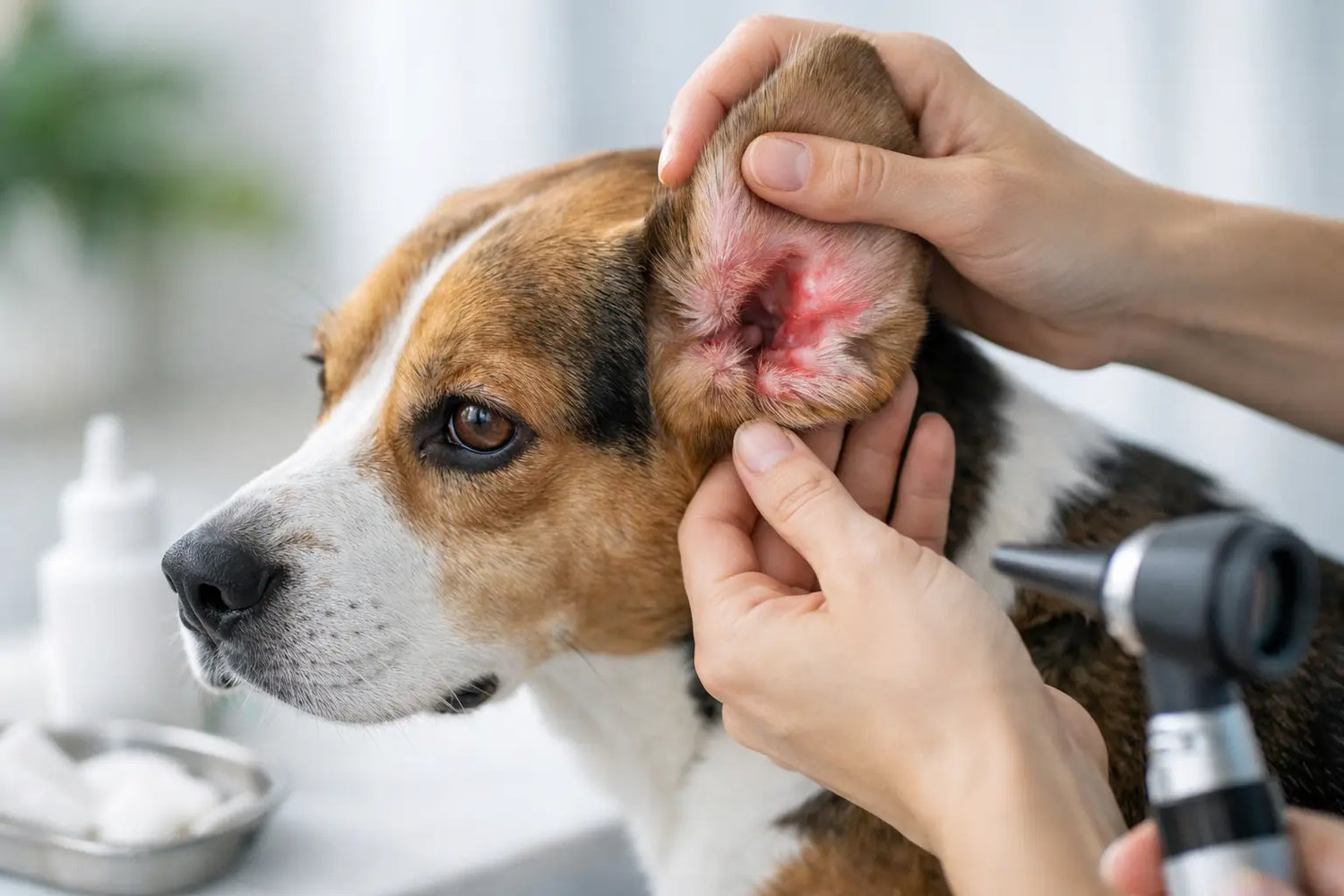
The first step is to look without improvising. If the ear flap is red, the dog feels itchy, there is a bad smell, or you notice brownish or yellowish secretions, the ear is asking for attention. At this stage, avoid cotton swabs, alcohol, hydrogen peroxide, or harsh home remedies: they can further irritate the skin and push residues deeper.
What you can do immediately is a gentle external cleaning with an ear cleanser formulated for veterinary use, capable of respecting the skin’s balance. Good cleansing helps remove dirt, excess earwax, and residues that feed itching and inflammation, but it must be done with suitable products and proper technique. If the dog shows marked pain, cries when you touch the ear, or tilts its head abnormally, do not force the cleaning.
At the same time, observe the general behavior. A dog that eats, sleeps, and plays normally may be at the beginning of a local problem. If instead it appears depressed, has a fever, or obvious pain, the situation changes and a quicker evaluation is needed.
Why do dog ears become reddened?
Redness is not a diagnosis but a signal. The most common causes are external otitis, earwax buildup, moisture retained after bathing, environmental or food allergies, presence of foreign bodies like grass awns, mites, and irritations due to overly vigorous cleaning.
There are also dogs more predisposed than others. Breeds with floppy ears or lots of hair in the ear canal tend to retain heat and moisture more easily. Dogs that bathe frequently, swim, or live in humid environments can also more easily develop ear discomfort. This does not mean every redness is serious, but ignoring it is not a good strategy.
An important point is this: redness can be the final symptom of a problem that originates elsewhere. In many cases, behind recurring otitis there are allergies, skin barrier alterations, or particularly sensitive skin. For this reason, merely masking the symptom without working on local well-being and prevention often leads to relapses.
Signs not to underestimate
Light redness can improve with proper ear hygiene, but some signs require more caution. If you notice a strong and unpleasant odor, abundant secretions, the dog scratches until it injures itself, or shakes its head continuously, it is likely that there is an inflammation that deserves clinical attention.
The color of secretions also provides useful indications. Very dark earwax, moist material, or pus should not be read as simple dirt. The same applies if the ear appears swollen, very warm, or painful to the slightest touch. In these cases, it is better not to wait.
When to call the veterinarian
You should contact the veterinarian immediately if the dog experiences intense pain, loses balance, holds its head tilted, or has blood or abundant secretions. A visit is also appropriate if the redness returns often or improves and reappears after a few days. Recurrences are not normal: they indicate that the cause has not been removed or that the ear needs a more targeted protocol.
How to clean the ear without worsening the situation
Ear cleansing is useful, but only if done properly. The cleanser should be chosen for its ability to clean without altering the skin. Too aggressive formulations can dry out, irritate, and create a vicious circle: the more you clean, the more the ear becomes sensitive.
A correct approach involves applying the product, gently massaging the base of the ear to promote distribution, and letting the dog shake its head. Then remove the excess only from the visible part with a soft gauze. The canal should not be explored deeply. If the dog is agitated or uncomfortable, it is better to stop and not turn cleaning into a traumatic maneuver.
This is where well-formulated natural remedies come into play. Functional ingredients like Aloe Arborescens and carrot are particularly interesting in supporting ear skin function because they help soothe the skin, counter oxidative stress, and support the physiological repair of the skin barrier. Aloe Arborescens, especially if processed with methods that preserve active principles, offers a very useful emollient and rebalancing action when the ear skin is irritated. Carrot, rich in valuable components for skin nourishment, contributes to the well-being of sensitive skin.
Natural remedies for reddened dog ears
When talking about natural remedies, it is important to be clear: natural does not mean generic or improvised. It means choosing formulations designed for veterinary use, with known active ingredients and a precise function. For a reddened ear, delicacy, cleansing ability, and soothing support are needed.
Dermofunctional ear products based on Aloe Arborescens can be a valuable help in cases of irritation, itching, and mild to moderate redness, especially when the problem is related to skin sensitivity, residue buildup, or insufficient maintenance. When combined with other functional ingredients with emollient and rebalancing effects, they help keep the ear microenvironment cleaner and less favorable to recurrences.
The difference also lies in how the active ingredient is processed. A cold processing method designed to preserve natural principles allows better enhancement of the raw material’s potential. This is precisely the meaning of specialized formulations created for pet wellness: not to cover up the problem, but to concretely support the daily well-being of the ear.
Reddened dog ears: what to do if the problem recurs often
If the dog has repeated episodes, a change in perspective is needed. It is not enough to intervene only when redness appears. A prevention routine built on its profile is necessary: ear conformation, skin type, bathing frequency, possible allergies, seasonality of symptoms.
In many subjects, regular management with a gentle ear cleanser significantly reduces the risk of buildup and irritation. But be careful not to overdo it. Cleaning a healthy ear too often can alter its balance. Here the principle of the right measure applies: prevention yes, overdoing no.
In dogs with sensitive skin or predisposition to inflammations, local support with quality natural formulations helps keep the skin more elastic and less reactive. If the veterinarian suspects an allergic or infectious component, treatment will need to be integrated according to diagnosis. The natural remedy is a valuable support but does not replace the visit when there are important clinical signs.
The most common mistakes that slow improvement
One of the most frequent mistakes is waiting too long. Another is using products designed for humans or DIY solutions read online. The dog’s ear has different characteristics and can react badly to unsuitable substances.
Also, stopping cleaning as soon as redness decreases can be counterproductive if residues remain in the ear or if the skin is still fragile. Conversely, continuing intensive treatments without reason can irritate even more. Balance is needed, and a suitable product is necessary.
There is also the issue of bad odor. Many owners cover it up, few interpret it correctly. Odor is a clinical signal, not an aesthetic detail. If it persists despite proper hygiene, further investigation is needed.
A concrete support for ear well-being
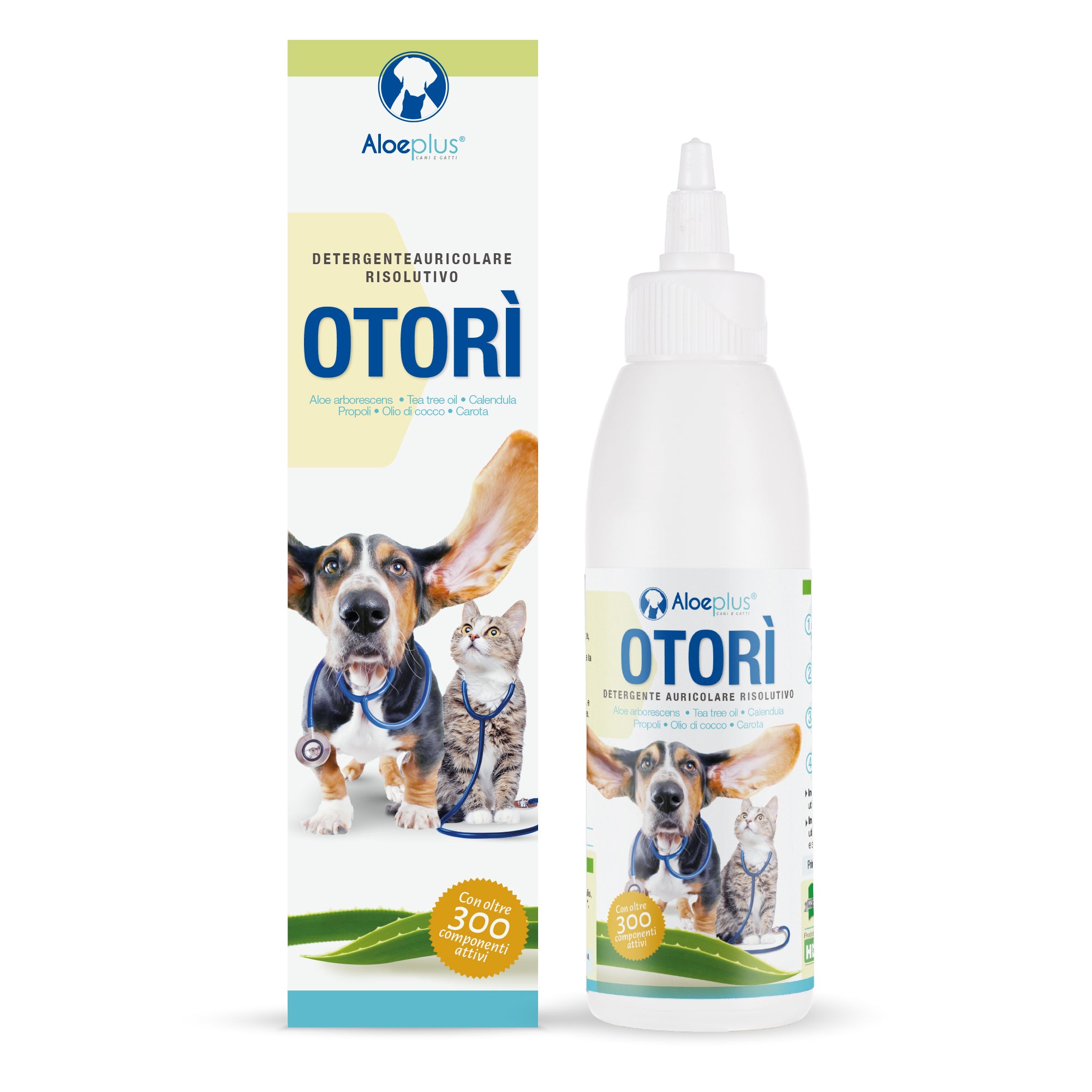
When your dog has reddened ears, the priority is to give relief without further stressing the area. This is why specific ear products are valuable, designed to cleanse and soothe with selected natural active ingredients. In a well-constructed veterinary formulation, Aloe Arborescens and carrot can offer real help in calming irritation and protecting ear skin, especially if included in a technological system capable of preserving their effectiveness.
For those looking for a practical but well-founded solution, it is worth turning to specialist treatments designed for daily use and prevention of recurrences. On the website https://aloepluscaniegatti.it you can learn more about products and approaches dedicated to the ear well-being of dogs and cats, with a vision that combines naturalness, specialization, and veterinary attention.
A reddened ear should not be dramatized, but neither minimized: listening to the dog’s signals and choosing the right support at the right time is already a concrete form of care.