

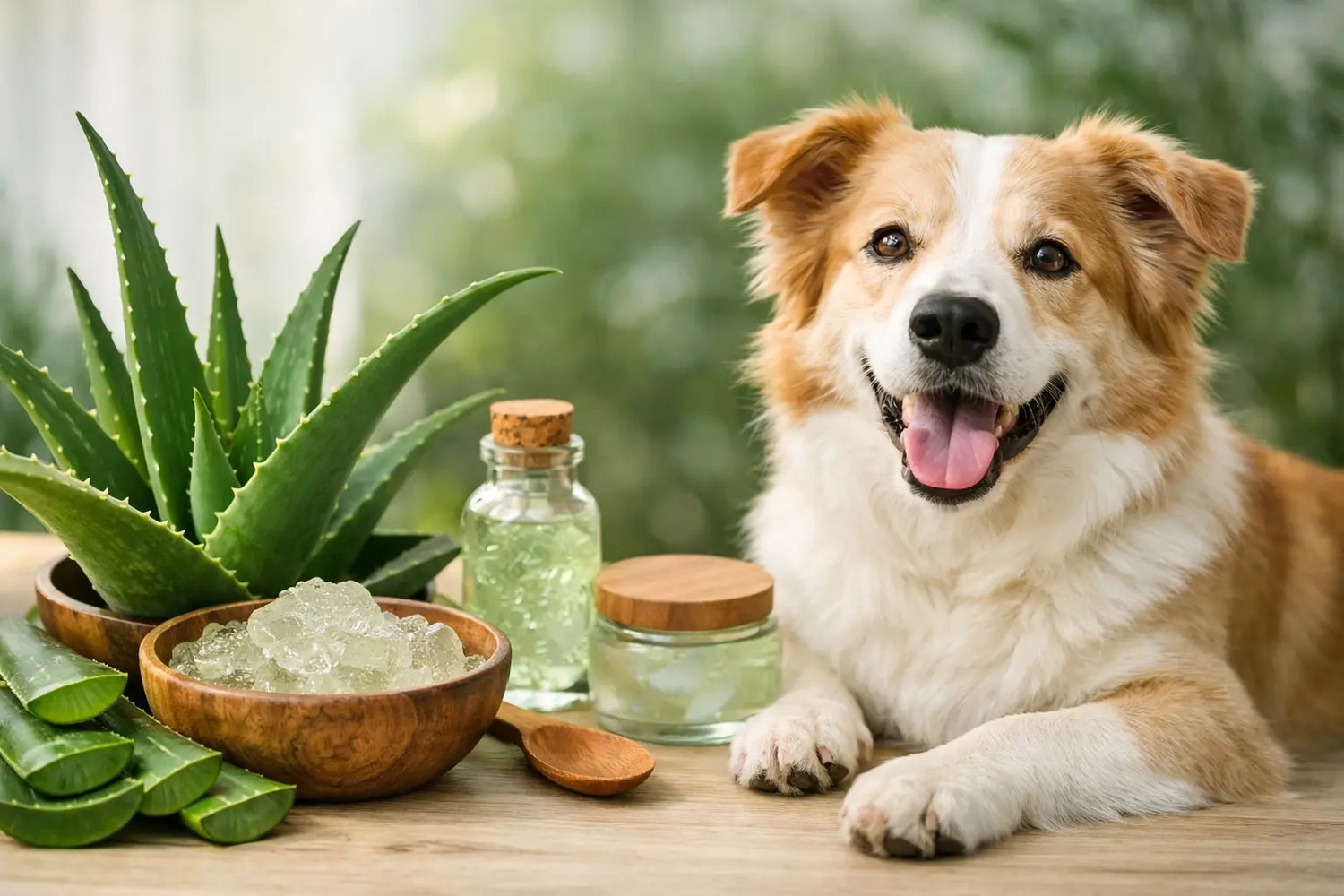
When a dog scratches often, has red skin, or an easily irritated intestine, the question immediately arises: does aloe vera really offer concrete benefits for dogs, or is it just a trendy natural remedy? The right answer is neither blindly enthusiastic nor inherently skeptical. It depends on which aloe is used, how it is processed, and especially the dog’s actual need.
Those who live daily with their pet know well: among itching, redness, small localized irritations, sensitive digestion, and recurring discomforts, a solution is needed that is gentle but also effective. This is where aloe, when included in serious and well-studied veterinary formulations, can become a useful support in the daily routine.
Aloe vera for dogs: benefits and limits to know
Talking about aloe in a generic way is the first mistake. Not all aloe plants are the same, not all extractions have the same quality, and not all products intended for human use are suitable for dogs. The benefits attributed to aloe mainly concern its soothing, moisturizing, rebalancing action and support for skin tissues and mucous membranes.
On the skin, a well-designed formulation can help calm areas stressed by scratching, rubbing, or environmental sensitivity. When the issue concerns overall well-being, interest shifts to aloe’s functional properties as physiological support in targeted nutraceutical protocols. But precision is needed here: there is no single ingredient that solves everything alone.
The decisive point is understanding that aloe does not replace veterinary evaluation if the dog has lesions, ear infections, serious dermatitis, persistent diarrhea, or pain. However, it can be a valuable ally when used in the correct context, with dosages and carriers designed for the animal’s body.
Why aloe is interesting for the dog’s well-being
Interest in aloe arises from the natural richness of its functional components. Polysaccharides, vitamins, minerals, and other bioactive substances make it a highly valued raw material in products dedicated to skin and physiological support. However, the final quality depends on how the plant is cultivated, selected, and processed.
In dogs, the benefits most often noticed by owners concern more comfortable skin, better hydration of sensitive areas, and a reduced tendency to irritate easily. This is especially true when aloe is combined with other ingredients that have a synergistic function, capable of supporting the skin barrier, local defenses, and tissue nourishment.
An often underestimated aspect is gentleness. Many owners look for something that does not attack already sensitive skin. In these cases, aloe is appreciated precisely because it offers a gentle supportive action, suitable even for frequent hygiene and maintenance routines.
Benefits of aloe vera for dogs’ skin
The skin is one of the areas where aloe shows its most interesting profile. In dogs with mild redness, dryness, occasional itching, or areas subjected to continuous licking, a well-formulated dermofunctional solution can help restore comfort.
The first concrete benefit is the soothing effect. When the skin is stressed, the dog tends to scratch more, and the cycle feeds itself. Early intervention with targeted natural ingredients can help break this cycle and protect the skin surface.
The second advantage concerns hydration. Poorly hydrated skin is often more reactive, less elastic, and more exposed to external agents. Aloe helps maintain the right balance, especially if included in products designed for veterinary use and not improvised.
The third point is support for the physiological recovery of the skin barrier. This does not mean promising rapid or miraculous healing, but accompanying the skin toward a more balanced condition. In dogs prone to seasonal or environmental sensitivities, this approach can make a real difference in daily management.
Aloe and intestinal well-being: when it makes sense to talk about it
When aloe is mentioned, many immediately think of external use. In reality, interest in oral support exists but must be approached with much more caution. Dogs are not small humans, and products cannot be chosen by analogy.
In veterinary nutraceuticals, aloe can be included in formulations designed to support the body’s well-being, also in relation to the intestine, physiological defenses, and overall vitality. Here, the purity of the raw material, safety of processing, and presence of other functional components capable of complementing its action come into play.
For a dog with sensitive digestion or a body challenged by stressful periods, a quality supplement can offer interesting support. But it is not enough to just see the word aloe on the label. The botanical species, production process, and veterinary purpose of the product matter.
Not all aloe is the same: the value of Aloe Arborescens
The market often talks about Aloe Vera broadly, but there are important differences between species. In advanced veterinary formulations, Aloe Arborescens is appreciated for its particularly rich natural profile. When combined with complementary actives like carrot, the result can be even more interesting nutraceutically and dermofunctionally.
The processing method also makes a difference. A cold processing aimed at preserving active principles helps maintain the raw material’s value intact, preventing the final product from losing exactly what it should offer. For this reason, in a specialized brand like Aloeplus Cani e Gatti, the choice of ingredients and production process is not a technical detail but the heart of effectiveness.
For the owner, this translates into something simple: fewer generic promises and more attention to the real quality of the formula. If the dog has a concrete need, a product designed for that need is required, not just any aloe.
When aloe can really be useful
Aloe makes sense especially in maintenance and support paths. It can be a good ally for dogs with sensitive skin, recurring redness, tendency to itch, need for gentle localized hygiene, or the necessity of daily functional support.
It can also be useful during seasonal changes, periods when the dog is more exposed to environmental stress, or when you want to strengthen a wellness routine already established with the veterinarian. In these cases, consistency matters more than seeking immediate results.
However, if the dog has intense symptoms, persistent bad odor, wounds, secretions, significant diarrhea, or rapid worsening, aloe alone is not enough. A clear diagnosis is needed. This realistic approach is what truly protects the animal.
How to choose an aloe product for your dog
The best choice always starts with three questions: what is it for, which body area is it designed for, and what quality was it formulated with. A product for the skin does not meet the same needs as an oral supplement, just as a gentle cleanser has a different function from intensive support.
It is worth checking that it is a formulation specific for dogs, developed in a veterinary or veterinary nutraceutical context. It is also useful to verify the presence of complementary functional ingredients, because aloe often works better in synergy than alone.
Finally, pay attention to tolerability. The most attentive owners rightly look for products that are effective but easy to use, well accepted by the animal, and suitable for continuity. If a solution is inconvenient or impractical, it will hardly become part of the routine.
The real difference is the approach: natural, but with criteria
The appeal of natural remedies is understandable. When it comes to your own dog, you want something gentle, safe, and respectful of their balance. But natural does not automatically mean suitable, nor sufficient in every situation.
The smartest choice is to focus on products that combine naturalness, veterinary specialization, and formulations built on concrete needs. In this sense, aloe performs best not when presented as a universal solution, but when included in precise protocols for skin, hygiene, and functional support.
Those seeking real benefits should look less at slogans and more at substance: botanical species, extraction method, active synergies, safety of use, and consistency with the dog’s problem. This is where trust is born. And this is where a daily routine can turn into concrete help to improve your pet’s well-being.
If your dog shows signs of recurring discomfort, starting with quality natural ingredients is a sensible choice, provided it is guided by criteria and attention: true well-being does not come from easy promises but from well-made solutions designed for them.