
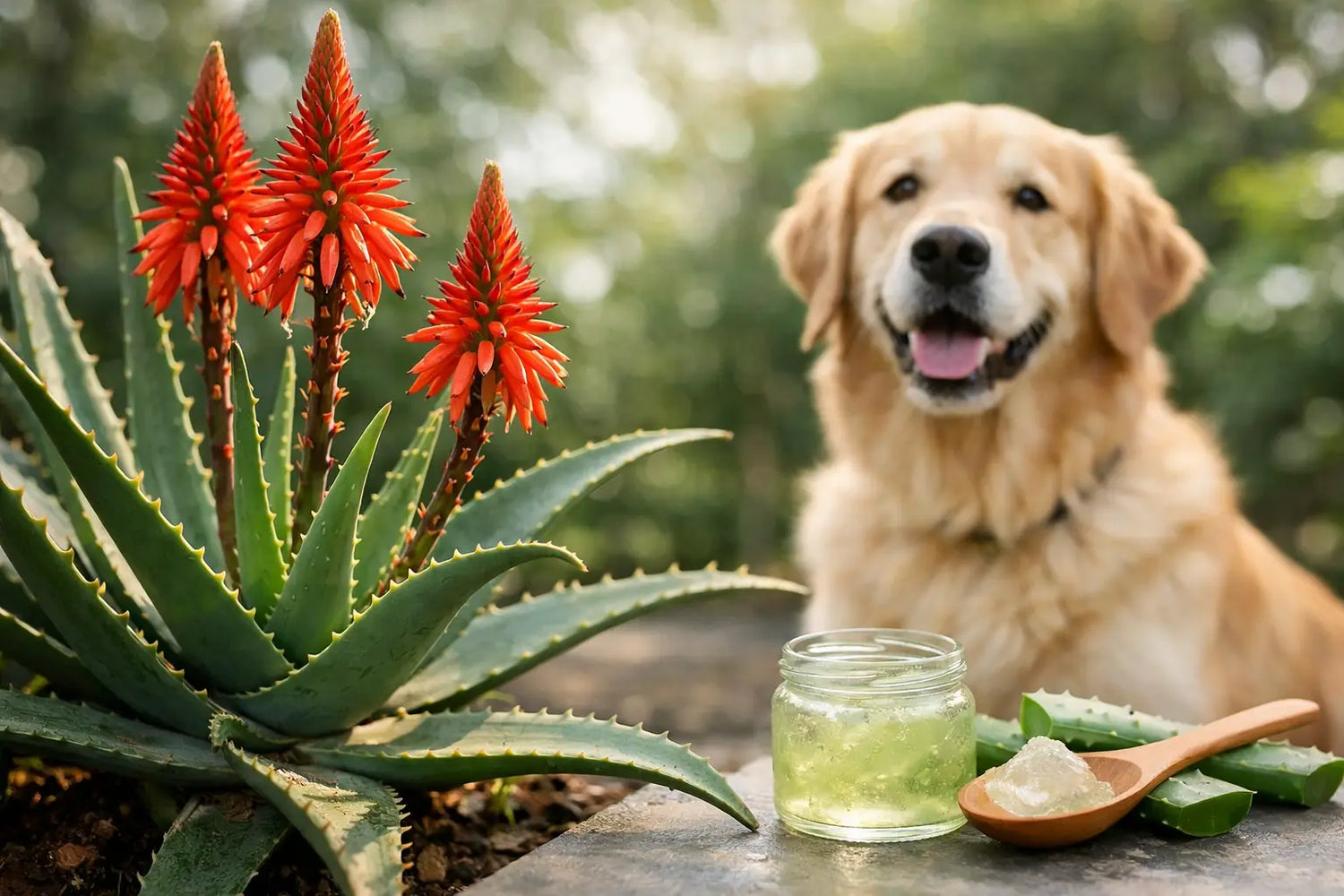
When a dog scratches often, has red skin, dry paws, or small recurring irritations, the search for a gentle but effective remedy leads many owners to an aloe arborescens guide for dogs. It’s an understandable choice: aloe is associated with soothing, moisturizing, and protective action, but there is a huge difference between correct use, myths, and well-formulated products.
Aloe arborescens guide for dogs: where to really start
The first thing to clarify is simple. Just reading “aloe” on the label is not enough to expect the same result. In a dog’s well-being, the botanical species used, the quality of the raw material, the processing method, and especially the intended use all matter.
Aloe Arborescens is appreciated because it is naturally rich in functional compounds that can help maintain skin balance and local comfort. In scientific literature, aloe has been studied for its soothing, moisturizing properties and support of the physiological skin repair processes. Some studies have also observed antioxidant activity and the ability to support the skin barrier under stress or irritation. This does not mean it is a universal cure. Instead, it means that in selected situations it can be a concrete help, especially when included in serious veterinary formulations.
What aloe arborescens can do for dogs
In daily practice, aloe is mainly chosen for the skin and areas exposed to rubbing, dryness, or redness. Its strength is not to “cover” the problem but to help the skin regain comfort and hydration.
A dog with cracked paw pads, for example, does not just need something to grease the surface. It needs support that softens, protects, and helps limit moisture loss. The same applies to skin areas stressed by licking, weather, frequent washing, or irritating contacts. In these cases, aloe can make sense, especially if combined with other functional ingredients.
Aloe also plays a useful role in localized hygiene. In the ears, around the eyes, or in more sensitive skin areas, the goal is to cleanse without aggression. Here, the gentleness of the formula matters as much as the main active ingredient.
When it can be useful and when not
The most common mistake is using aloe as a generic solution for any symptom. If the dog has significant dermatitis, an open wound, pain, strong bad odor, secretions, or intense itching, do not start with a DIY remedy. Start with the veterinarian, because behind redness there may be allergies, bacterial infections, Malassezia, parasites, or systemic diseases.
Aloe has a more appropriate role when daily support is needed for sensitive skin, dry areas, mild irritation, gentle hygiene, or maintaining skin well-being. This is where a formulation designed for pets makes a difference. A product developed for veterinary use takes into account the dog’s skin, application safety, and the presence of complementary actives that improve effectiveness.
Topical use or supplementation? It depends on the problem
Talking about aloe without distinguishing between external use and nutraceutical support creates confusion. If the problem is localized—dry paws, stressed skin, ears to cleanse, delicate eye area—the rationale is topical. If the dog shows broader signs, such as skin vulnerability associated with a general condition to support, it may be useful to consider a combined approach with the veterinarian.
For example, skin and joint well-being do not always go separately. An older, less mobile dog may lick more, stress certain areas, and show poorer skin quality. In these cases, integrated support makes more sense than a single response. Aloe Arborescens, carrot, and other functional ingredients can be included in targeted solutions depending on the specific need.
Why the formula matters more than the trend
A good aloe arborescens guide for dogs must say it clearly: the value is not in the ingredient’s name but in the final formula. Aloe can be very useful, but alone it does not solve everything.
If the focus is paw skin, the combination with urea, shea butter, sweet almond oil, and vitamin E has a precise logic. Aloe helps skin comfort, while the other components work on nourishment, elasticity, and barrier protection. For this reason, in the presence of dry paw pads or pads exposed to heat, cold, and abrasive surfaces, a formulation like Zampet responds more completely than a simple generic gel.
If the problem is a red or stressed skin area, aloe can better express its function in synergy with carrot and peppermint. Carrot provides substances with antioxidant action and support for skin trophism, while peppermint contributes a pleasant relief sensation. In this context, Dermogel can be a concrete solution for localized application when practicality and an easy-to-use texture are needed.
In careful ear hygiene, aloe works well together with calendula, propolis, coconut oil, and tea tree oil in formulas designed to cleanse and maintain the balance of the outer ear. For the eye contour, a gentler combination with chamomile, cornflower, and witch hazel is preferable, designed to clean without irritation.
The advantage of proper processing
When talking about natural ingredients, one often overlooked detail is how they are processed. Heat and aggressive processes can deplete the most sensitive compounds. For this reason, cold processing methods are particularly interesting in plant-based formulations.
In the case of Aloeplus Dogs and Cats, the proprietary HDR method was developed precisely to best preserve the active principles of natural raw materials, starting with Aloe Arborescens and carrot. For the owner, this translates into a very concrete benefit: not only declared naturalness but a technical attention aimed at maintaining the real functionality of the formula.
What research says, without easy promises
Aloe vera and aloe arborescens have been the subject of scientific interest for their content of polysaccharides, phenolic compounds, vitamins, and bioactive substances involved in maintaining skin hydration and physiological re-epithelialization processes. Studies published in scientific journals and reviews dedicated to medicinal plants have described soothing, antioxidant, and tissue repair support activities, while emphasizing that results and effect intensity depend on extract quality and clinical context.
Simply put: the scientific basis exists but must be read seriously. Aloe can be a useful resource in daily support, not a shortcut to avoid diagnosis when the dog has a real problem.
How to choose well for your dog
If you are considering an aloe-based product, first look at the dog’s real need. Dry skin, localized redness, cracked paw pads, ears to cleanse, or sensitive eyes require different products. The second question to ask is whether the formula is veterinary, because this increases the likelihood of finding concentrations, textures, and ingredient combinations suitable for the animal.
Consistency also matters. Dermofunctional products work better when used continuously and correctly. Occasional application can provide temporary relief, but if the skin is chronically stressed, a routine is needed. And if there is no improvement or worsening appears, the visit to the veterinarian should not be delayed.
Aloe arborescens guide for dogs: the mistake to avoid
The most frequent mistake is improvising with products designed for humans or homemade preparations. Dog skin is not the same as ours, and some formulations can be unsuitable or even counterproductive. Also, a dog licks, rubs, moves, and comes into contact with dirty surfaces. This greatly changes how a product must be designed.
Choosing a specialist solution means better protecting the dog and having a clearer goal: cleanse, soothe, hydrate, support the skin barrier, or accompany joint and general well-being with targeted nutraceuticals. This is where the difference between “natural” and “functional” becomes concrete.
When aloe arborescens is included in a well-constructed formula, with complementary ingredients and a veterinary logic, it stops being a trend and becomes a real help in the daily management of the dog’s well-being. And for those who see their animal as a family member, this is not a nuance: it is the most serious way to take care of them.