When a dog keeps licking the same paw, a cat has red skin, or an elderly animal moves with more difficulty, the question is always the same: is there a natural aid that is truly useful, and not just a trend? In this context, aloe arborescens is attracting more and more attentive owners because it combines daily support, good tolerability, and very concrete applications in the well-being of dogs and cats.
The key word, however, is just one: quality. It is not enough to read “aloe” on the label to expect the same result. The botanical species, the part of the plant used, the processing method, and the presence of other functional active ingredients capable of complementing its action all matter. This is where the difference between a generic product and a formula truly designed for veterinary needs lies.
Aloe arborescens in veterinary medicine: why it is talked about so much
In the pet world, interest in Aloe Arborescens arises from a real need. Many dogs and cats live with sensitive skin, redness, localized dryness, ear discomfort, cracked paws, or a natural loss of elasticity and joint comfort with age. In these cases, owners often seek a natural support to integrate into the daily routine without giving up a serious and thoughtful approach.
Aloe Arborescens is appreciated for the richness of its phytocomplex. In well-studied formulations, it can offer a soothing, moisturizing, and protective action on the skin, as well as be included in supplements aimed at general well-being. In scientific literature, aloe has been investigated for its potential antioxidant, film-forming, and support properties for normal skin repair processes. This does not mean turning it into a universal solution. It means recognizing that, if included in the right product, it can have a useful and concrete role.
The most important difference is this: using aloe in veterinary medicine does not mean improvising home remedies. It means choosing formulations developed for animals, with sensible concentrations, complementary ingredients, and a clear usage logic.
Where it can be useful in dogs and cats
The first area is the skin. Redness, sensitive areas, dryness, licking stress, and minor superficial discomforts are common situations in both dogs and cats. Here aloe can help provide relief, maintain hydration, and support the skin barrier. When combined with ingredients like calendula, propolis, peppermint, or tea tree oil in well-balanced formulas, the action can become even more targeted on local comfort and hygiene of the affected area.
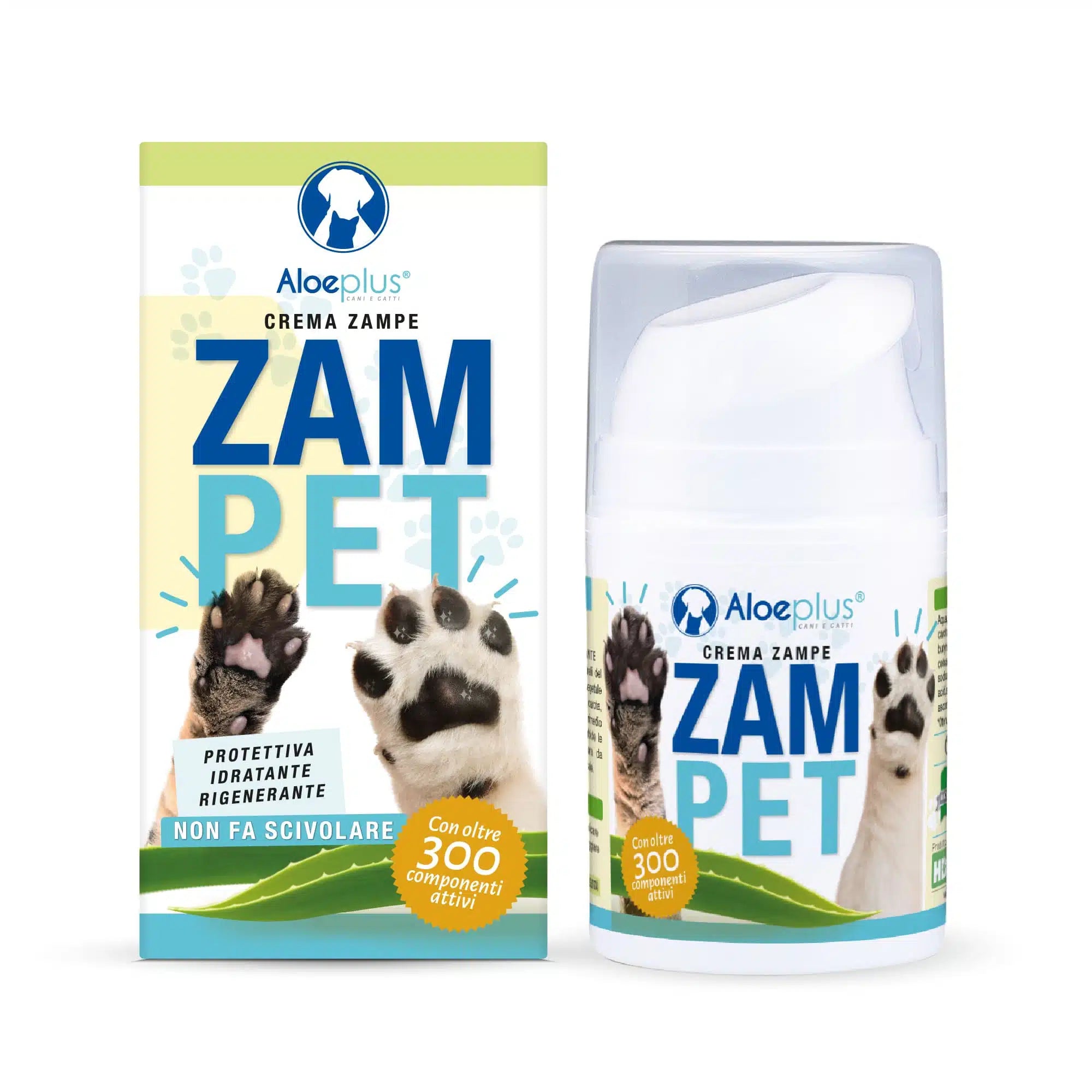
A second area concerns the paws. Dry, thickened, or stressed paw pads from heat, cold, or abrasive surfaces are a real problem. In this case, a formula combining aloe and carrot, along with urea, shea butter, sweet almond oil, and vitamin E, works comprehensively: softening, nourishing, and protecting. The benefit is not only aesthetic. A more elastic and cared-for paw helps the dog walk better and reduces daily discomfort.
Then there is the ear and eye area, which requires even more attention. It is never about “treating a clinical problem alone,” but about maintaining cleanliness and comfort with specific functional cleansers. Aloe, paired with chamomile, cornflower, witch hazel, or calendula, can make the hygiene routine gentler and more effective, especially in animals prone to secretions, sensitivity, or unpleasant odors.
Finally, there is systemic support. Some nutraceutical formulations include Aloe Arborescens alongside joint or metabolic ingredients to offer a broader action. This is the case for products designed for mature, active subjects or those with movement stiffness, where the goal is not to “work miracles,” but to improve daily quality of life.
Not all aloes are the same
Let's clarify. When talking about aloe, there is often confusion between different species, purified gels, extracts, juices, and more or less concentrated preparations. For the owner, the risk is buying a product just because it references a well-known natural ingredient, without knowing what they are really purchasing.
In aloe arborescens, at least four factors matter. The first is the quality of the raw material. The second is the production process, because heat and aggressive processing can deplete the phytocomplex. The third is the formulation, meaning with which other ingredients the aloe is combined. The fourth is the intended use: skin, ears, eyes, paws, joints, or metabolic support require different formulas.
For this reason, a cold processing method has real value. A process like HDR, developed to preserve the active principles of natural raw materials, meets this need precisely: to keep the functional component of Aloe Arborescens and other plant actives as intact as possible. When choosing a product for your dog or cat, this type of technological attention weighs much more than a generic promise on the label.
Aloe arborescens and synergistic ingredients
Aloe performs best when it is not left alone. In veterinary dermatology and nutraceuticals, synergy between actives is often what makes a formula truly useful in practice.
For joint well-being, for example, the combination of Aloe Arborescens, Perna canaliculus, Boswellia serrata, Devil’s claw, Spirulina, and carrots creates a precise logic. Perna canaliculus is studied for supporting joint function. Boswellia and Devil’s claw are widely used ingredients in nutraceutical protocols aimed at movement comfort. Spirulina and pigment-rich vegetables provide interesting antioxidant compounds. Aloe, in this context, completes the formula’s profile.
For the skin, the combination with calendula and propolis helps when the main need is to soothe and protect. If the focus is ear cleansing, coconut oil and tea tree oil can contribute to cleaning the area, always in products formulated with balance and specific for veterinary use. For eyes and eye contour, ingredients like chamomile, cornflower, and witch hazel support gentle cleansing. For paws, carrot adds a nourishing and protective component very consistent with aloe’s emollient action.
This is the difference between a “famous” ingredient and a functional solution. The owner is not looking for a botanical name. They seek a visible result on their animal.
What research says, without easy promises
Those who love natural remedies are right to ask for serious foundations. There is extensive literature on aloe, especially in human and experimental fields, describing potential activities related to skin hydration, film-forming action, support for the skin’s microenvironment, and antioxidant properties. Some reviews published in international journals, including studies in the Journal of Ethnopharmacology and Molecules, have analyzed aloe’s bioactive compounds and their possible interest in skin well-being and cellular protection processes.
That said, the correct point to convey to the owner is another: research on the ingredient is useful, but the final result depends on the formulation, consistent use, and the specific animal’s problem. If there is dermatitis, otitis, conjunctivitis, or lameness, a veterinarian’s evaluation is always needed. A good natural product does not replace a diagnosis. It supports it, accompanies it, and helps daily management when chosen wisely.
How to choose the right product for the right problem
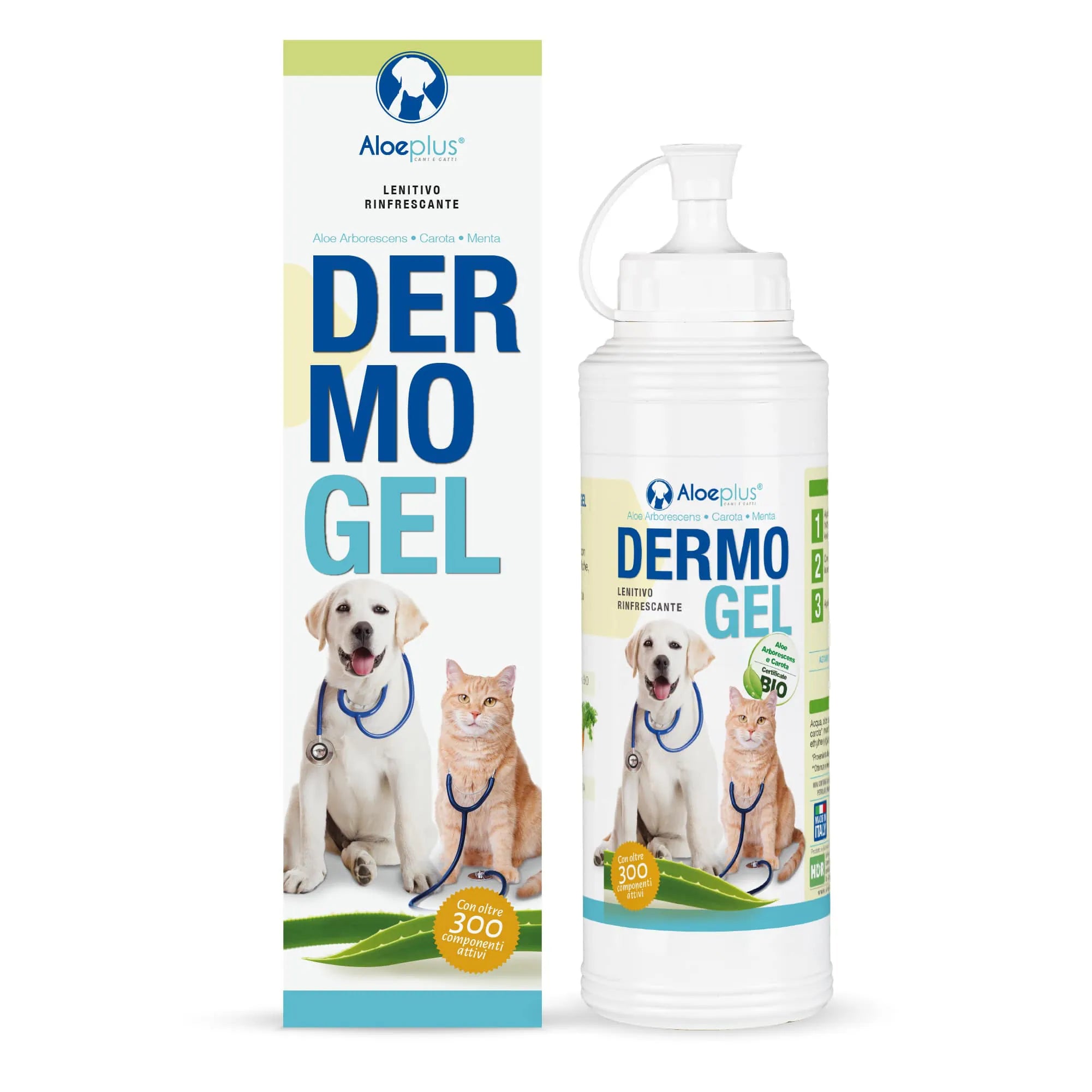
If your dog or cat has localized skin discomfort, the most sensible choice is a targeted dermofunctional product. In the presence of redness, stressed skin, or areas prone to discomfort, a gel or spray formula with aloe and soothing actives has an immediate practical logic.
If the problem concerns paw pads and cushions, a specific paw product is needed. In that case, the goal is not only to calm but also to repair dryness and create lasting comfort. When the need is ear or eye hygiene, dedicated cleansers must be used, not products adapted from other areas.
For mature animals or those with joint stiffness, it makes more sense to consider a complete nutraceutical rather than relying on a single ingredient. A formula with Aloe Arborescens, Perna canaliculus, Boswellia, Devil’s claw, Spirulina, and carrots better addresses the complexity of the problem than a reductive approach.
In this logic, specialized solutions like Artricur pet for joint support, Otorì for ear cleansing, Oftocur for eye hygiene, Zampet for paw well-being, Dermogel and Dermospray for skin comfort are born. It’s not a matter of catalog. It’s the correct way to treat different needs with different formulas.
When to expect results and when to stop
Another often overlooked aspect is time. Well-formulated natural products can provide rapid relief for local comfort, for example on dry skin or cracked paws, but joint support generally requires more continuity. If after correct use no improvement is seen, or if the problem worsens, pain appears, there is a strong bad odor, abnormal discharge, or compulsive licking, you must stop and consult the veterinarian.
True daily care is not about random attempts. It is about observing your animal, intervening early, and choosing solutions formulated with veterinary logic. Aloe Arborescens can be a valuable resource, but only when included in products designed to provide a concrete response to the real problem of the dog or cat.
Those who live with an animal know this well: feeling better is seen in the small daily gestures, in a freer step, in a finally soft paw, in less irritated skin, in a clean ear without stress. This is where trust in the right choices comes from.