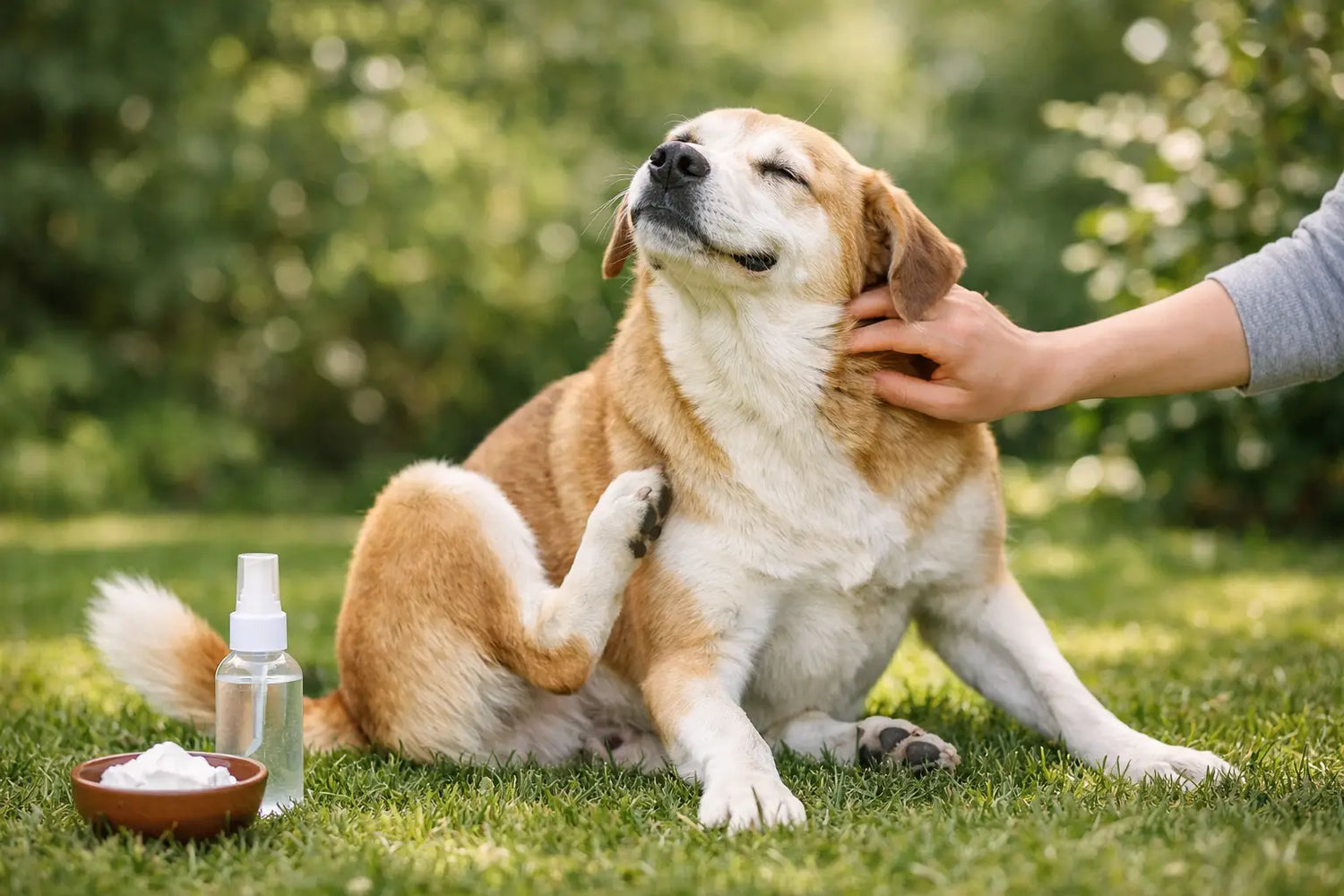
A dog that constantly scratches is not just annoyed. Often it sleeps worse, becomes restless, licks itself until it becomes red, and can even injure its skin. Understanding how to relieve itching in dogs means acting quickly, but also avoiding improvised solutions that cover the symptom without addressing the cause.
Itching, in fact, is not a diagnosis. It is a signal. It can be caused by dry skin, parasite bites, allergies, contact with irritating substances, poorly tolerated food, or alterations of the skin barrier. That’s why the first goal is not to "stop the scratching" at all costs, but to restore comfort to the skin in a safe and thoughtful way — with ingredients that truly work, not just listed on the label.
How to relieve itching in dogs without making the situation worse
When a dog scratches, the temptation is to immediately use any soothing product available at home. This is understandable, but it is not always the right choice. Some harsh cleansers, DIY remedies, or products not formulated for veterinary use can increase irritation and dryness.
The practical rule is this: first observe, then act. If the itching is mild and recent, you can start with a gentle local approach, focusing on proper hygiene, skin support, and reducing irritants. However, if the dog has crusts, bad odor, hair loss, lesions, recurring ear infections, or very intense itching, consulting a veterinarian should not be delayed.
An often underestimated point concerns the vicious cycle of itching-inflammation. The more the dog scratches or licks, the more the skin is damaged. The more the skin is damaged, the more the itching increases. Breaking this cycle requires active and functional ingredients — not just generically "natural," but with real soothing and repairing abilities. This is where Aloe Arborescens clearly stands out.
Why Aloe Arborescens is the most effective natural remedy for the skin
Not all aloe is the same. Aloe Arborescens contains a concentration of active ingredients — acemannan, aloin, polysaccharides, enzymes, and antioxidants — significantly higher than Aloe Vera commonly used in the cosmetic industry. But this advantage is completely lost if the plant is processed with high-temperature industrial methods or diluted to reduce costs.
The HDR® Method used in Aloeplus Dogs and Cats products processes aloe cold, preserving intact the active ingredients responsible for soothing, anti-inflammatory, and regenerative action. The result is an ingredient that effectively acts on inflamed skin: it calms itching, reduces redness, supports the repair of the skin barrier, and counters the mechanisms that feed the itching-inflammation cycle. This is not marketing. It is the difference between an ingredient listed on a label and an ingredient that works.
The most common causes of itching
To truly understand how to relieve itching in dogs, cases must be distinguished. Not all dogs scratch for the same reason, and treating different situations the same way often leads to disappointing results.
The most frequent causes are infestations by fleas or other parasites, which can trigger an intense reaction even with few bites. Then there are allergies, environmental or food-related, which tend to manifest with persistent itching, redness, licking of the paws, and sometimes associated ear problems.
There are also forms related to reactive or dehydrated skin, which is easier to irritate after improper washing, exposure to unsuitable detergents, or seasonal changes. In other cases, the problem starts from microbial or fungal overgrowth, especially when the skin is already compromised. Here itching is often accompanied by unpleasant odor, greasiness, or localized redness.
There is also an important aspect: some dogs have skin predisposed to inflammation more easily. In these subjects, occasional intervention is not enough. A constant maintenance routine is needed, designed to protect the skin barrier and reduce relapses. In all these scenarios, Aloe Arborescens offers broad support: its soothing and antioxidant action helps reduce skin inflammation regardless of the triggering cause, while the polysaccharides support the restoration of the damaged skin barrier.
First useful interventions at home
If the dog has mild or moderate itching and no significant wounds, you can start with some simple but effective actions. The first is to carefully check the coat, looking for fleas, dandruff, redness, small pustules, moist or thickened areas. Localization also helps: if the dog scratches a lot on the back and base of the tail, parasites are more likely, while paws, abdomen, muzzle, and ears suggest allergy or skin sensitivity.
The second useful step is to reduce everything that can irritate. It is better to avoid frequent baths with generic shampoos, strong fragrances, non-specific wipes, and household detergents used on beds or surfaces the dog contacts. Already inflamed skin requires gentleness, not aggressiveness.
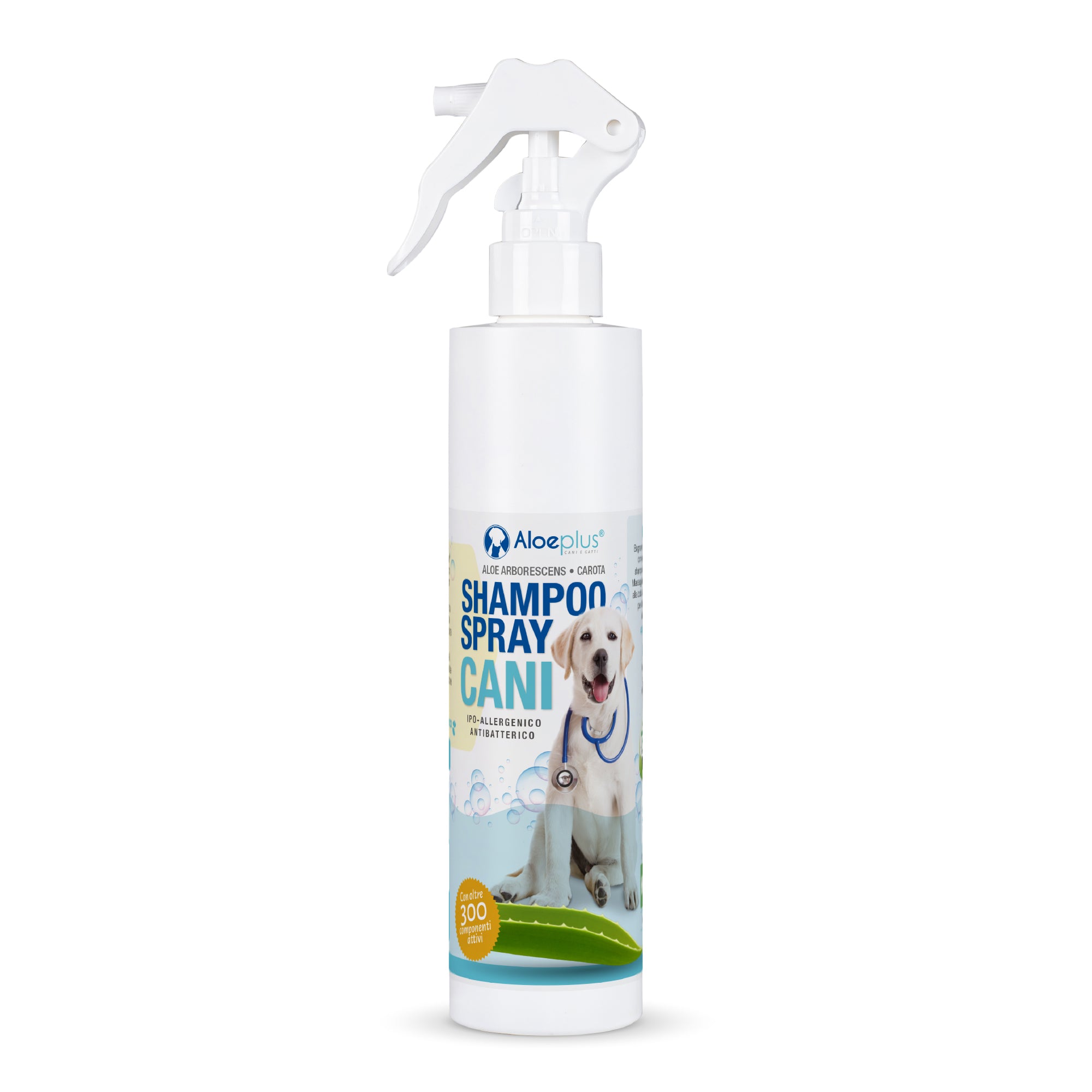
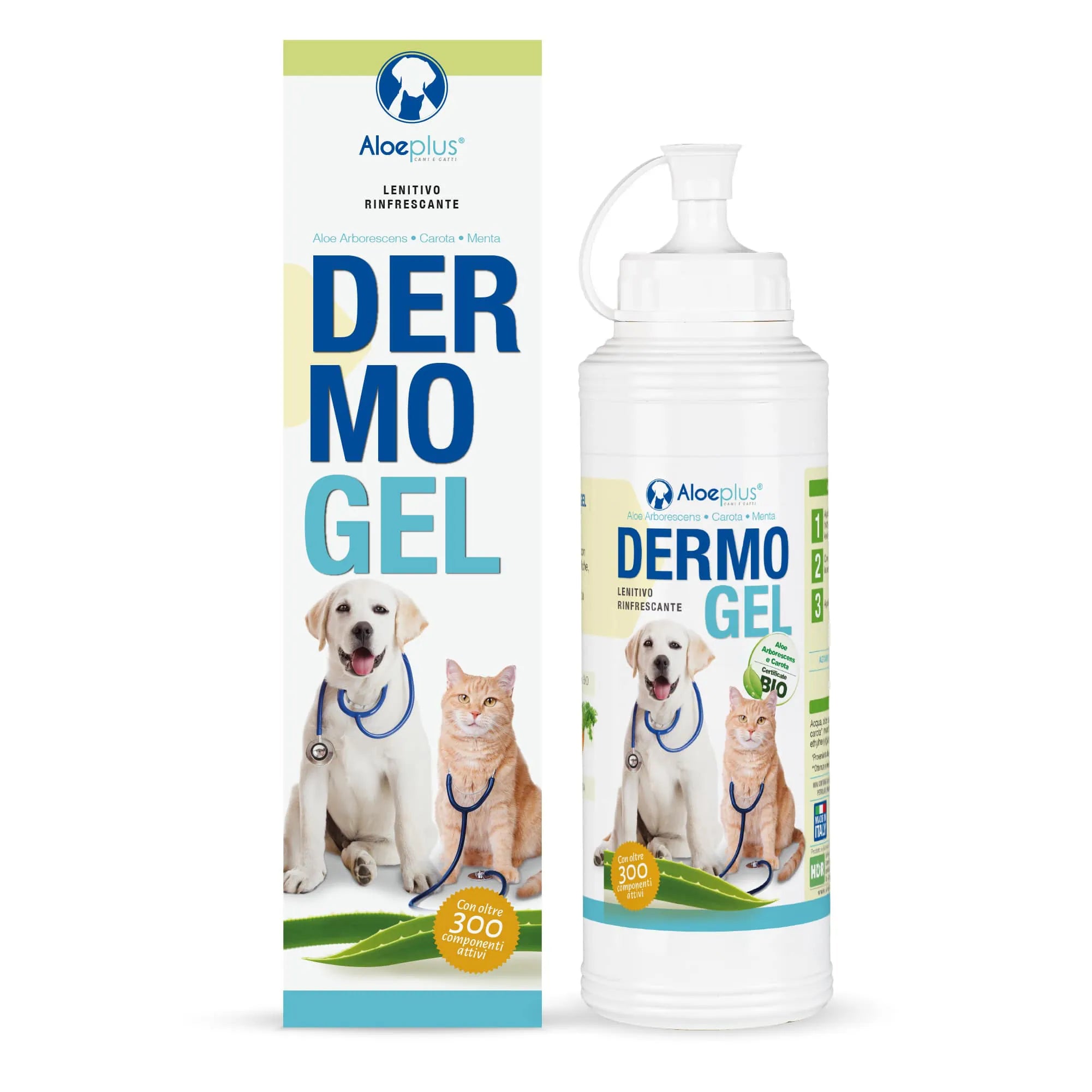
Then comes dermofunctional support. A soothing cleanser based on Aloe Arborescens, with active ingredients that have calming action and respect the hydrolipidic film, can help reduce discomfort and improve skin comfort effectively. In localized cases, lotions or gels suitable for veterinary use can also be a valid aid, especially if the dog tends to scratch the same spots repeatedly.
Does bathing help or not?
It depends on how it is done, with what, and in what situation. A proper bath can be very helpful when it is necessary to remove allergens, dirt, excess sebum, and irritating residues from the coat. But if a too degreasing product is used or the dog is washed too often without criteria, the skin can worsen.
In dogs with itching, shampoo quality matters more than frequency. A formulation with Aloe Arborescens as the central active ingredient — not as a background ingredient present in traces — helps cleanse while respecting the skin barrier and at the same time providing active ingredients with soothing action. The contact time and rinsing also make a difference: leaving residues on the coat can increase irritation, exactly the opposite of what is intended.
When itching is associated with redness, scaling, or fragile skin, the goal is not just to clean. It is to support the skin while it rebalances. For this reason, many owners find benefit in specific protocols that combine gentle cleansing with Aloe Arborescens and functional support, especially during relapse periods.
Nutrition and internal support: when they are really needed
If the dog has recurring episodes of itching, the skin should not be considered in isolation. The skin often reflects a broader balance involving the intestine, immune response, and nutrition. This does not mean every itch depends on food, but ignoring this aspect is a common mistake.
In some subjects, especially those with sensitive skin or allergic tendencies, an oral nutraceutical support based on Aloe Arborescens can make a difference that topical treatment alone cannot guarantee. The acemannan and polysaccharides of aloe taken internally support the immune response, contribute to intestinal balance — often related to skin allergies — and offer systemic antioxidant action that directly reflects on skin health. Internal support is more effective when integrated into a coherent plan, along with environmental management, proper hygiene, and veterinary evaluation if necessary.
For owners seeking a more natural but serious approach, the difference is made by the quality of raw materials, standardization of active ingredients, and the logic with which the product is formulated. It is not enough for an ingredient to be "natural" to be useful. It must be included in a formulation designed for the dog and for a specific skin need.
When to contact the veterinarian without delay
There are situations where wondering how to relieve itching in dogs at home is not enough. If the dog scratches continuously for days, injures itself, loses hair in patches, has bad skin odor, presents ear infections, crusts, moist lesions, or worsens rapidly, a veterinary visit is the most appropriate course.
The same applies if the itching recurs cyclically. Frequent relapses are not "normal." They may indicate an allergy, a parasitic cause not fully controlled, or a skin dysfunction requiring a more precise plan. In these cases, treating only the symptom provides temporary relief but not stability.
Another signal not to underestimate is a change in behavior. A dog bothered by its skin can become more nervous, sleep poorly, try to isolate itself, or react when certain areas are touched. Skin discomfort affects overall well-being much more than it seems.
The best strategy is continuous care
When it comes to itching, the real breakthrough comes with consistency. It is not useful to chase every emergency if the dog has already shown to have delicate skin. It works better to build a simple routine, consisting of coat checks, well-managed parasite prevention, cleansing with cold-processed Aloe Arborescens, and specific supports during critical times.
This is where a specialized brand like Aloeplus Dogs and Cats naturally fits into the choice of a careful owner: not with generic promises, but with targeted solutions for concrete problems, designed to accompany the dog in the daily management of sensitive skin.
The truth is that relieving itching does not just mean reducing a symptom. It means restoring peace to the dog, protecting its skin, and helping you read the right signals without wasting time. Choosing the right ingredient — Aloe Arborescens in its whole, undiluted, non-degraded form — is the starting point. When you intervene with judgment, gentleness, and suitable products, the difference is visible — and above all, you see the scratching stop.